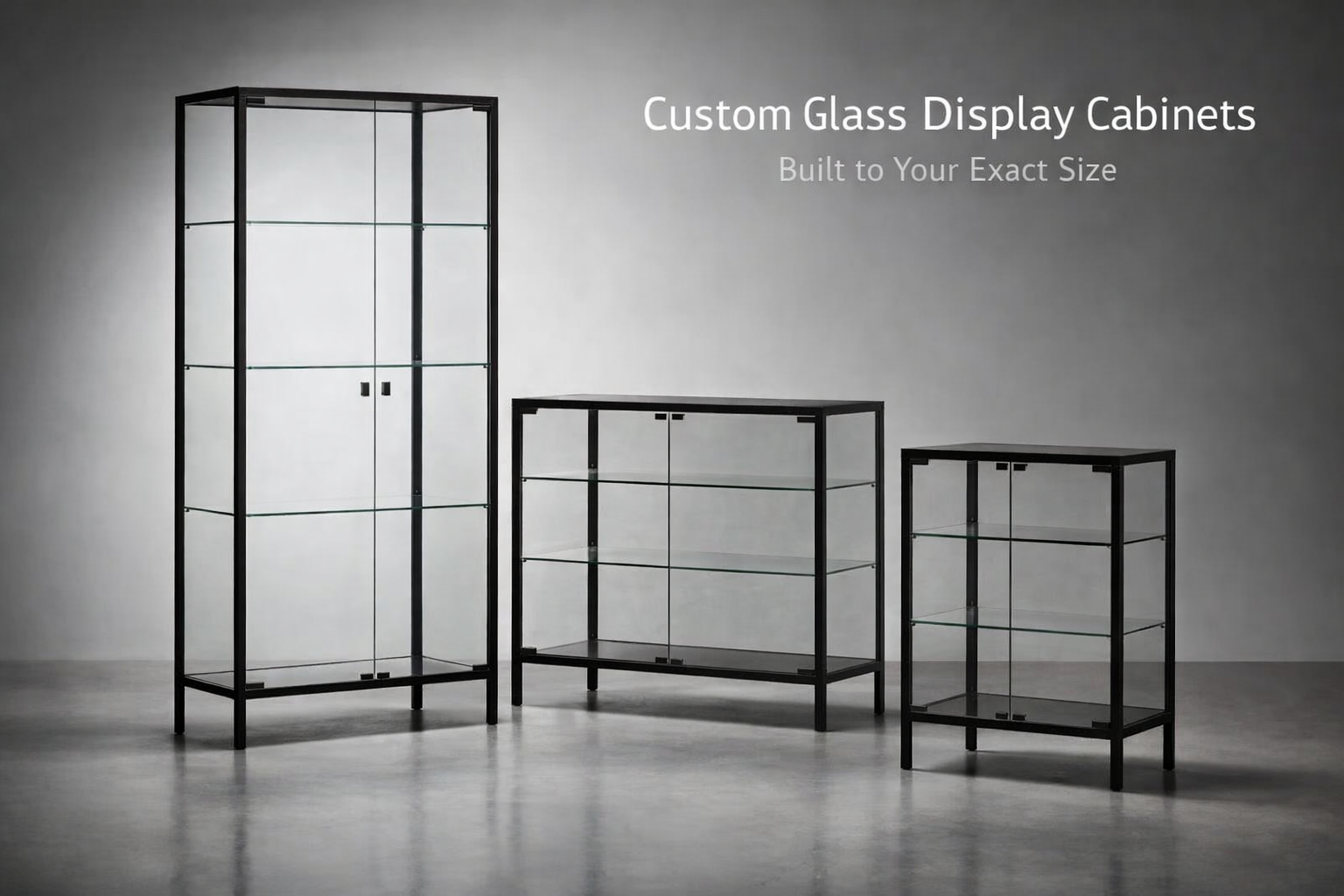
Custom Glass Display Cabinets — When Off-the-Shelf Isn’t Good Enough Guide #05: Custom Glass Display Cabinets — Built for Fit, Load, and Longevity Most buyers start with standard glass display cabinets. And for many uses, that’s fine.But when fit, proportion, load, or presentation actually matter, standard sizes quietly become the problem.This is where custom glass display cabinets make sense. 1. The real limitation of standard cabinets Standard cabinets are built to suit:generic room heightsaverage shelf loadsmass production efficiencyThey are not designed around your item.That’s why you see:wasted headroomshelves that flex under weightawkward spacingdoors that don’t align with the display layoutYou adapt the item to the cabinet — instead of the other way around. 2. What “custom” actually means A proper custom glass cabinet is not just “a different size”.It means:dimensions designed around the display itemcorrect glass thickness for the loadframe strength engineered for long-term useshelf spacing that matches sightlines, not defaultsdoors, access, and lighting planned togetherThe result isn’t just better looking — it’s structurally correct. 3. When custom is the right decision Custom cabinets are the smarter choice when:the item is oversized or unusually shapedweight exceeds standard shelf ratingsceiling height or floor space is constrainedpresentation matters (retail, showroom, collectors)the cabinet is intended as a long-term fixtureIf the cabinet is expected to last years — not months — custom wins. 4. Cost vs value (the part people get wrong) Custom cabinets cost more upfront. That’s obvious.What’s less obvious:replacing a flexed shelf costs moreupgrading later costs morecompromising presentation costs more over timeCustom isn’t about luxury.It’s about buying once instead of fixing twice. 5. The right way to approach a custom build Before requesting a custom cabinet, you should know:exact internal dimensions requiredapproximate weight per shelfaccess needs (front, rear, doors, locks)lighting expectationswhether the cabinet will ever be movedA good custom cabinet starts with the use case, not a catalogue. Final thought Standard cabinets are designed for averages.Custom cabinets are designed for your reality.If the display matters — fit it properly. → View Glass Display Cabinets→ Back to Guides