
Display cabinets for museums & galleries: what to consider in 2026
Museums & galleries
5 min read · Updated July 2026
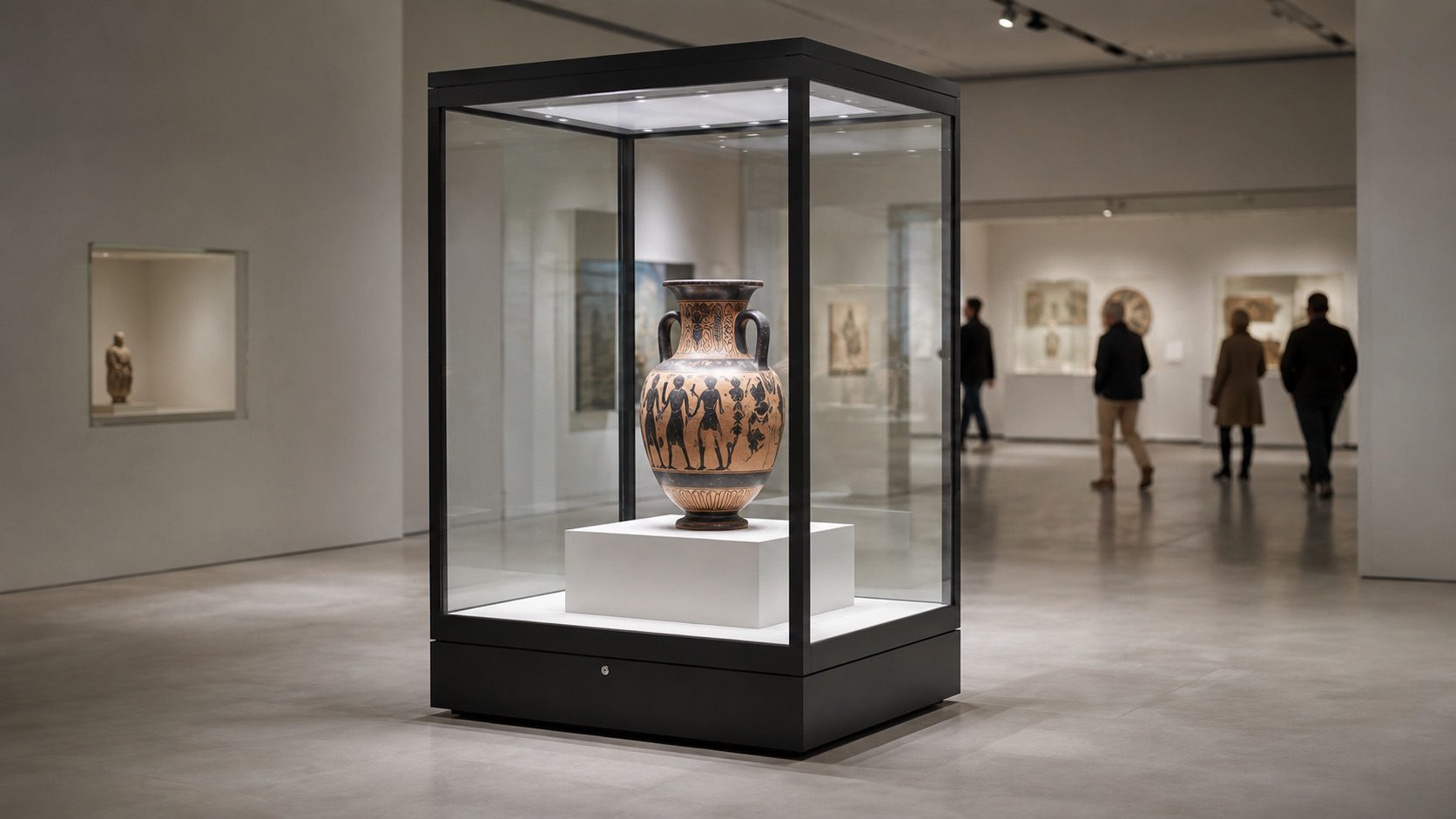
A museum or gallery cabinet has a harder brief than a retail one. It has to present an object beautifully and protect it — sometimes for generations. Clarity, conservation, lighting and security all matter more, and the margin for compromise is smaller. Here's what to weigh up when specifying display cabinets for cultural collections in 2026.
Glass clarity: low-iron is the standard
Standard glass carries a faint green tint that's invisible on a shop floor but obvious over a pale artefact or a subtle colour. Low-iron glass removes that cast, giving a near-colourless, true-to-life view of the object. For museum and gallery work it's the baseline — visitors should see the piece, not the glass.
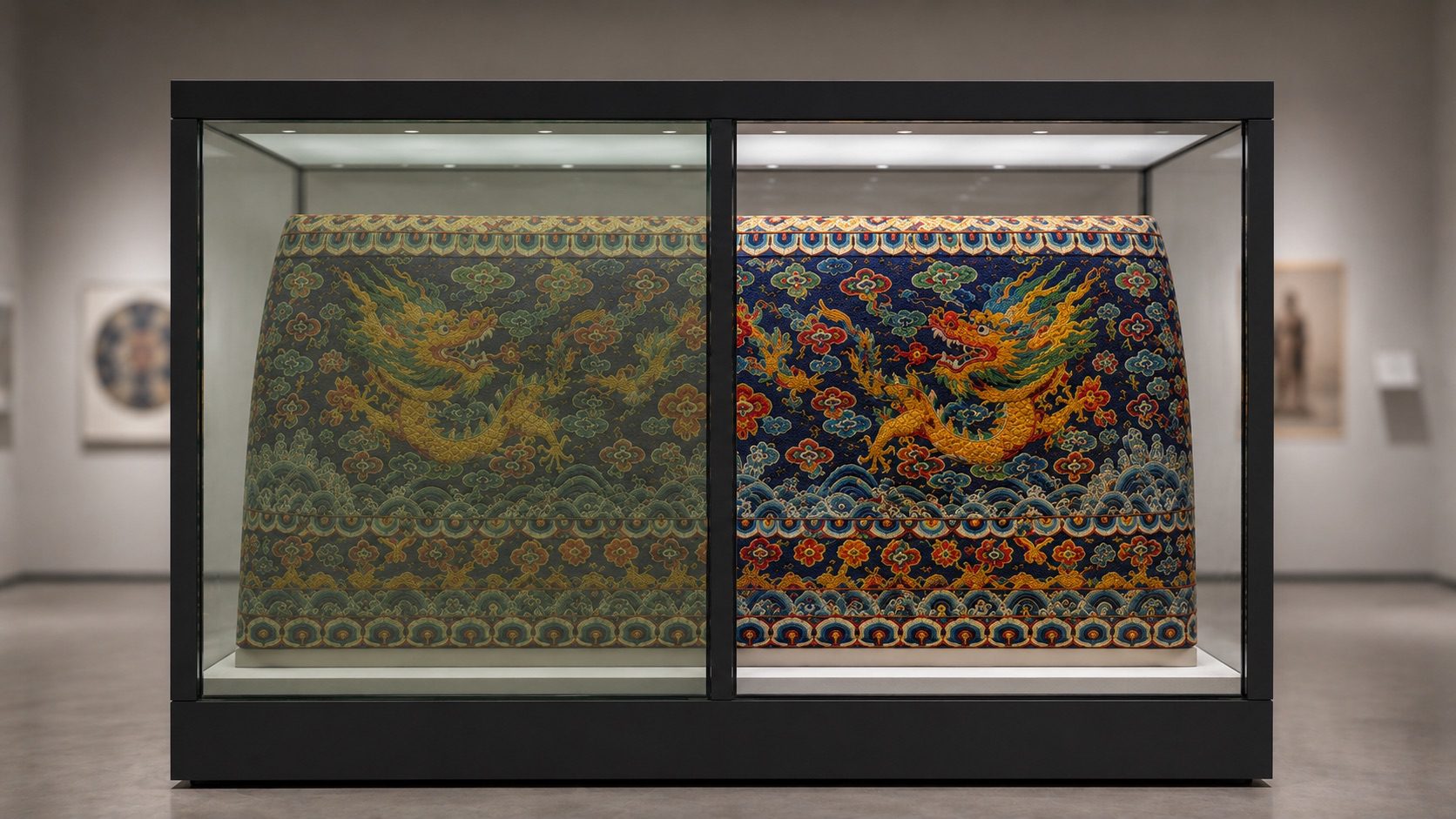
Low-iron (left) against standard glass — the green cast disappears and colours read true.
Conservation comes first
Sensitive materials — paper, manuscripts, textiles, natural history — degrade under UV and fluctuating conditions. A conservation-minded cabinet controls light exposure, seals well against dust and pests, and uses inert, low-emission materials that won't off-gas onto the object. For loaned or accessioned items, these aren't nice-to-haves; they're often a condition of display.
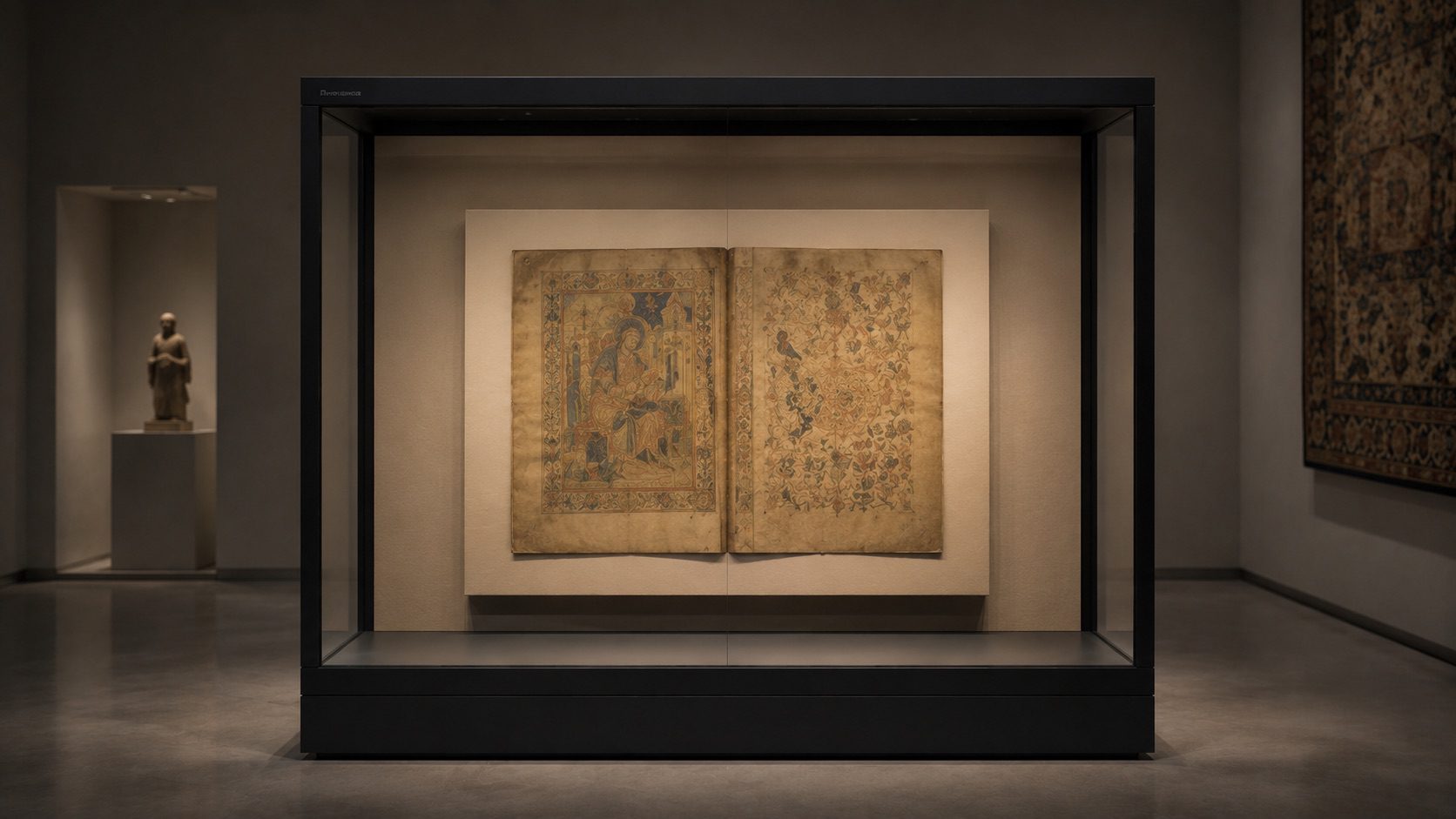
Conservation glazing shields a manuscript from UV and dust while keeping it clearly visible.
Lighting that reveals without harming
LED lighting is ideal for collections — it runs cool, emits negligible UV, and can be tuned to flatter the object. The goal is even, glare-free light that models form and colour faithfully. For a bronze or sculpture, careful placement brings out surface and patina; for works on paper, lower light levels protect the piece while still letting visitors read it.
LED lighting models a bronze sculpture's form and patina without heat or UV.
Low-iron glass for true colour · UV control for sensitive material · cool, glare-free LED lighting · dust and pest sealing · secure locking · inert, low-emission materials · custom sizing to the object · a plinth or mount at the right viewing height.
Security and peace of mind
Irreplaceable objects need locking as standard, tempered or laminated glass for impact resistance, and a sealed enclosure that resists tampering. Controlled, staff-only access protects the piece while keeping it fully visible — the same principle as high-value retail, applied to objects that can never be replaced.
Built around the object
Every artefact is a different size and demands a different presentation — a cloisonné vase, a bronze, a manuscript each need their own proportions, plinth height and sightlines. Custom sizing lets the cabinet frame the object rather than force it into a standard box, so the display feels designed for that single piece.
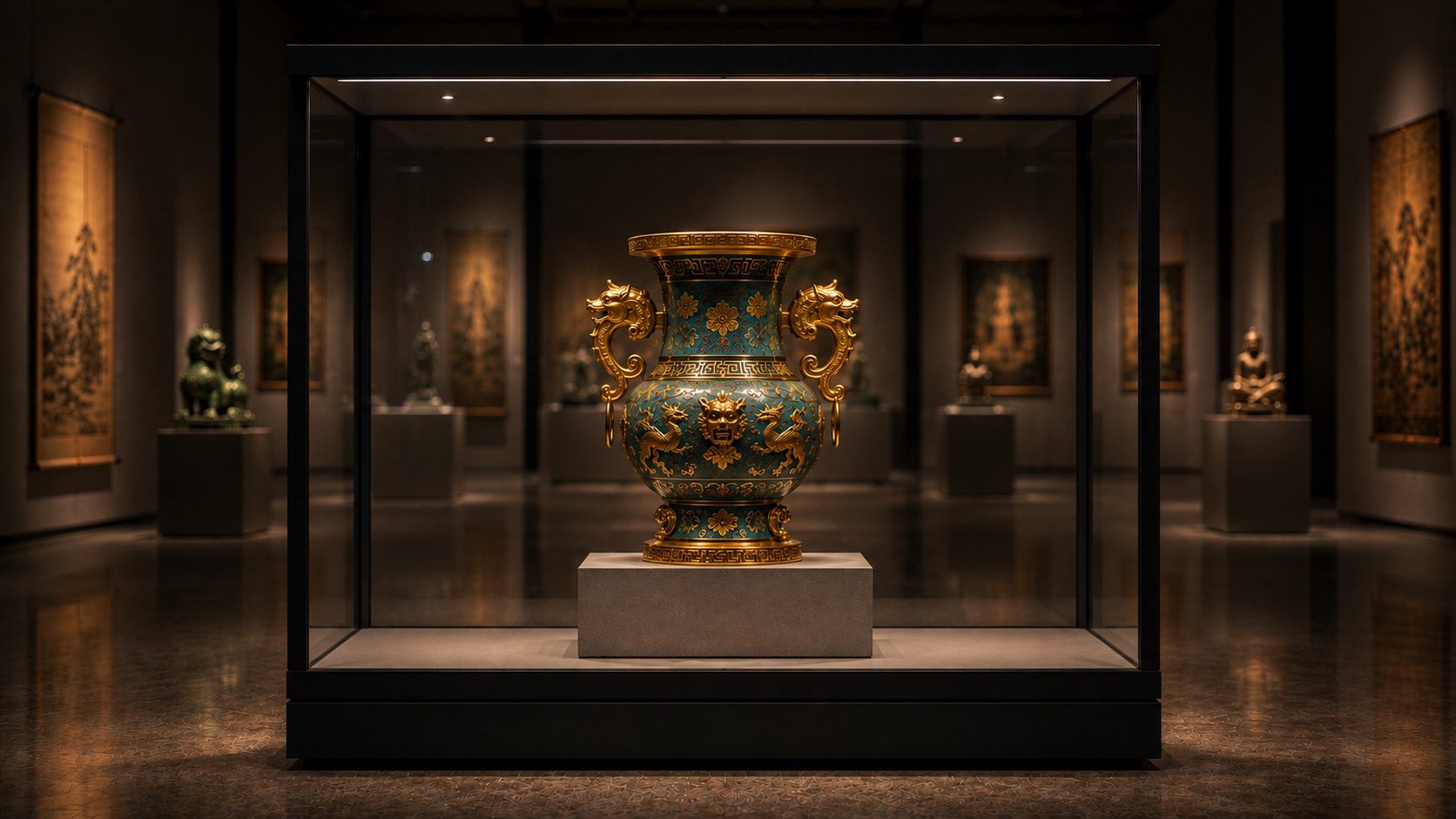
Built around the piece — a cloisonné vase framed at the right height and clearance.
Talk to us about low-iron, conservation-minded display cabinets built to your objects and space — made to exact size right here in Perth.
Get in touch Back to guides