
How to move a glass display cabinet safely
Moving & transport
4 min read · Updated July 2026
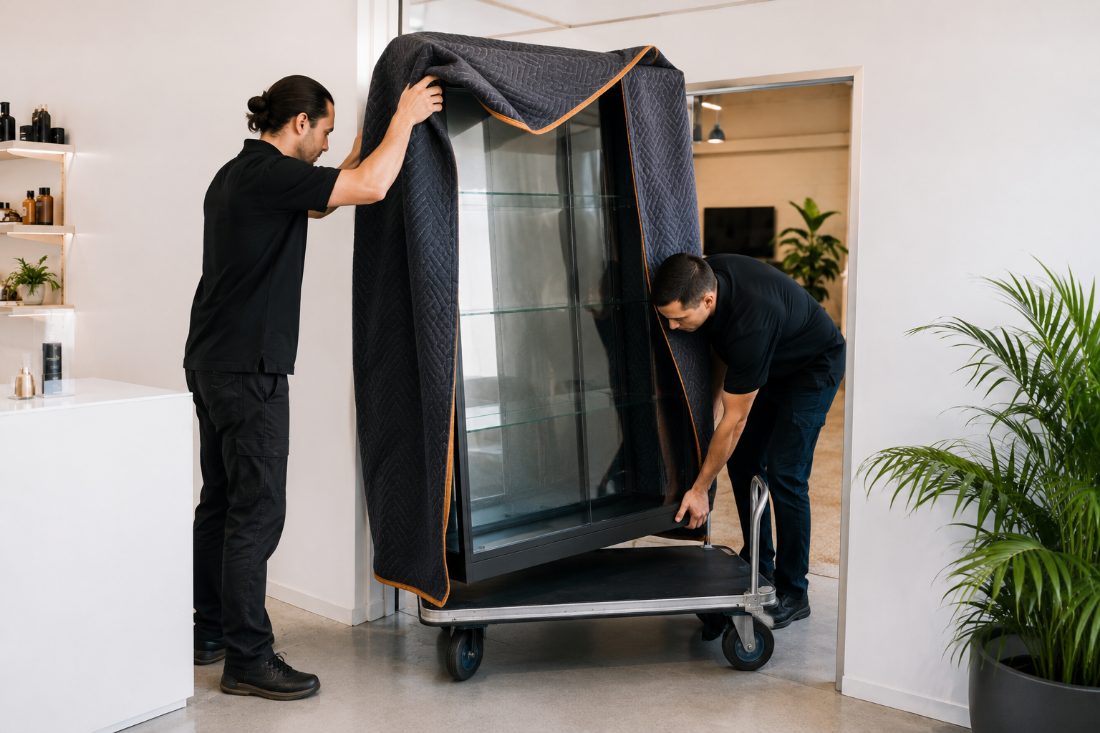
A glass display cabinet is heavy, top-heavy and made largely of glass — so moving one is about planning, not muscle. The good news is there are two safe ways to do it, and choosing the right one for your situation makes the whole job easy. This guide walks you through both, plus how to load and secure the cabinet for transport.
First, decide: move it whole, or take it apart?
As a rule of thumb, move the cabinet assembled for short, step-free moves — across a room, through wide doorways, or onto a trolley for a quick relocation. Take it apart for anything longer: stairs, tight doorways, or transporting it any real distance in a vehicle. Flat-packed panels are far safer to carry and far easier to protect.
A second person · a flat platform trolley · thick moving blankets · bubble wrap · foam corner protectors · ratchet tie-down straps.
Option A — Move it assembled (short distances)
Always empty the cabinet first and remove the loose glass shelves, wrapping them separately. Drape a thick moving blanket over the whole cabinet to protect the glass and frame, then — with one person on each side — tilt it just enough to slide a flat platform trolley underneath. Keep the cabinet upright at all times; never lay a glass cabinet flat on its back.
Move slowly, with one person steadying the top and one guiding the trolley. Take doorways and thresholds gently — a sudden bump is what cracks glass, not the weight itself.
Option B — Take it apart (longer moves & transport)
For stairs or any trip in a vehicle, flat-packing is the safest choice. Working calmly, separate the glass panels, the shelves and the frame sections. Wrap every glass panel individually in bubble wrap, fit foam blocks over the corners — corners are where glass chips first — and keep the frame rails bundled together. Label or photograph the parts as you go so reassembly is straightforward.
Stack the wrapped pieces flat with moving blankets between each layer, heaviest at the bottom. Packed this way, the whole cabinet becomes a neat, stable stack that's easy to carry and hard to damage.
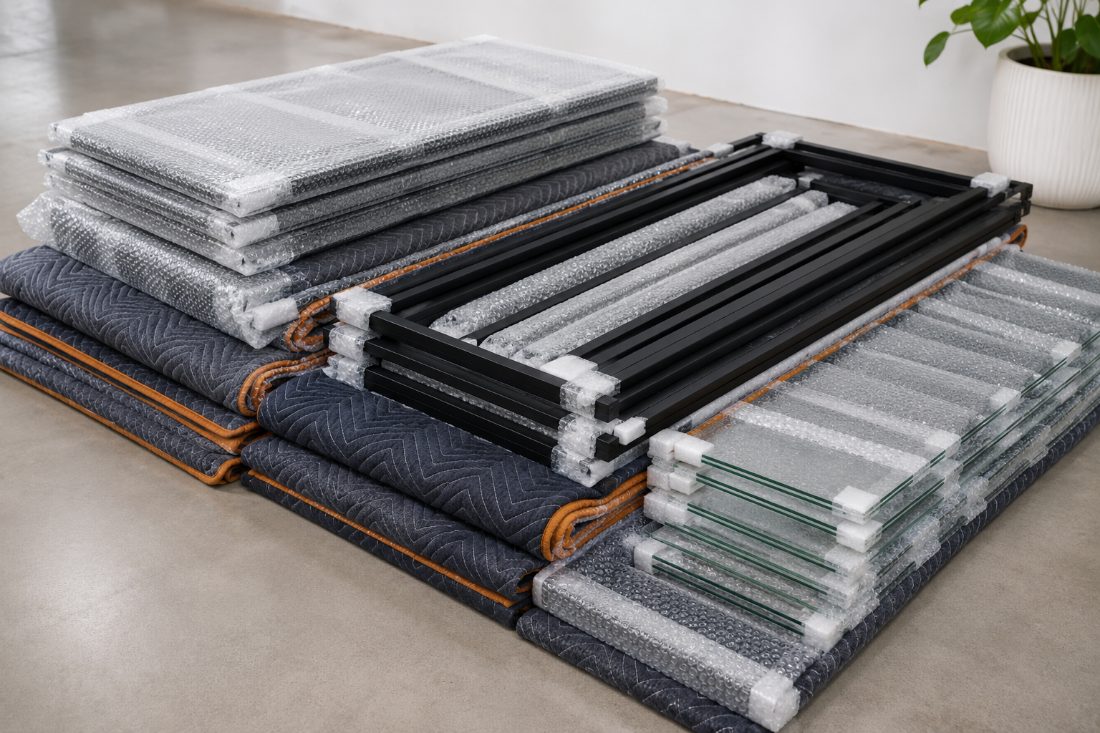
Taken apart and stacked flat — glass wrapped, corners protected, frame bundled.
Loading and securing it in the vehicle
Inside the van, stand wrapped glass panels upright against a padded wall — never flat on the floor, where road vibration travels straight through the glass. Keep the corner protectors in place and press each panel firmly against the padding.
Run a ratchet tie-down strap across the panels and into the van's anchor points, and tighten until there's no movement at all. The single most important rule of transport: nothing should be able to shift, slide or fall when the vehicle brakes or turns. Drive smoothly and leave extra braking distance.
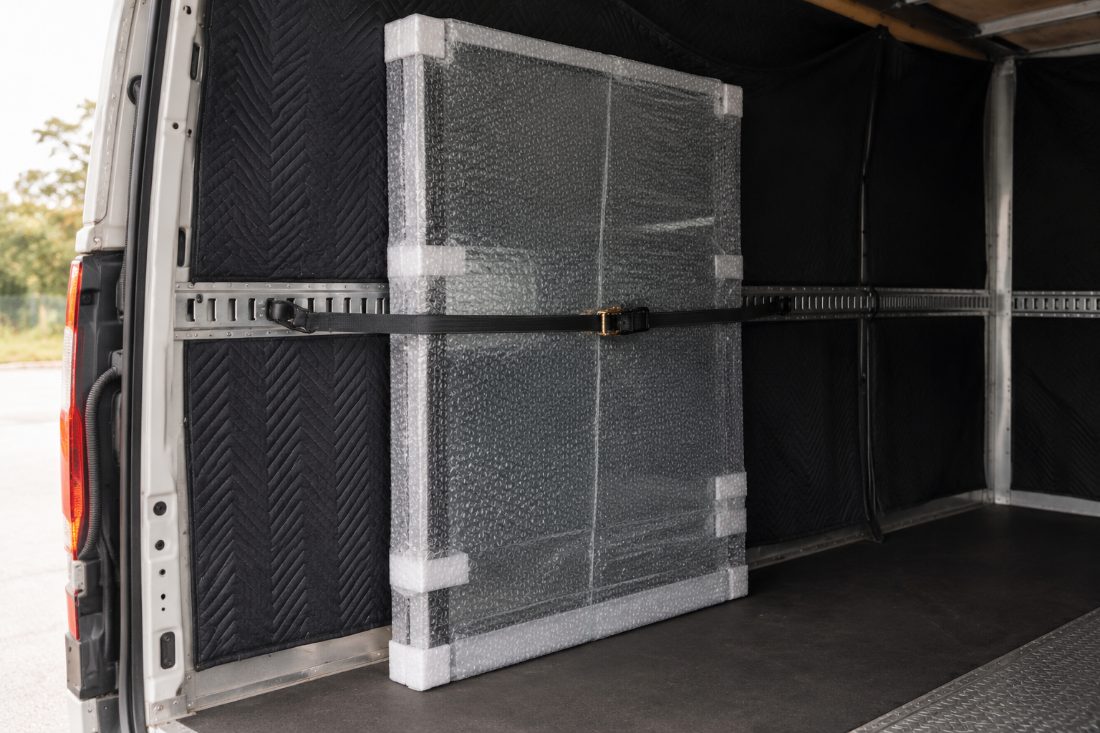
Upright against padding and ratchet-strapped — no movement in transit.
Do's and don'ts
- Do empty the cabinet and remove the glass shelves before moving it.
- Do keep an assembled cabinet upright at all times.
- Do protect every corner — corners chip first.
- Don't try to move it alone, or drag it across the floor.
- Don't lay glass flat in a vehicle, or leave any piece unstrapped.
Reassembling at the other end
Unpack in reverse order, building the frame first, then fitting the glass panels, then the shelves. Check every joint is seated before you load the cabinet back up, and give the whole thing a wipe down — moving is the perfect moment to start your new display with clean glass.
Every Hobbs cabinet is made to order and designed to come apart cleanly for transport — built to your exact size.
Get in touch Back to guides