
Stopping Wobble
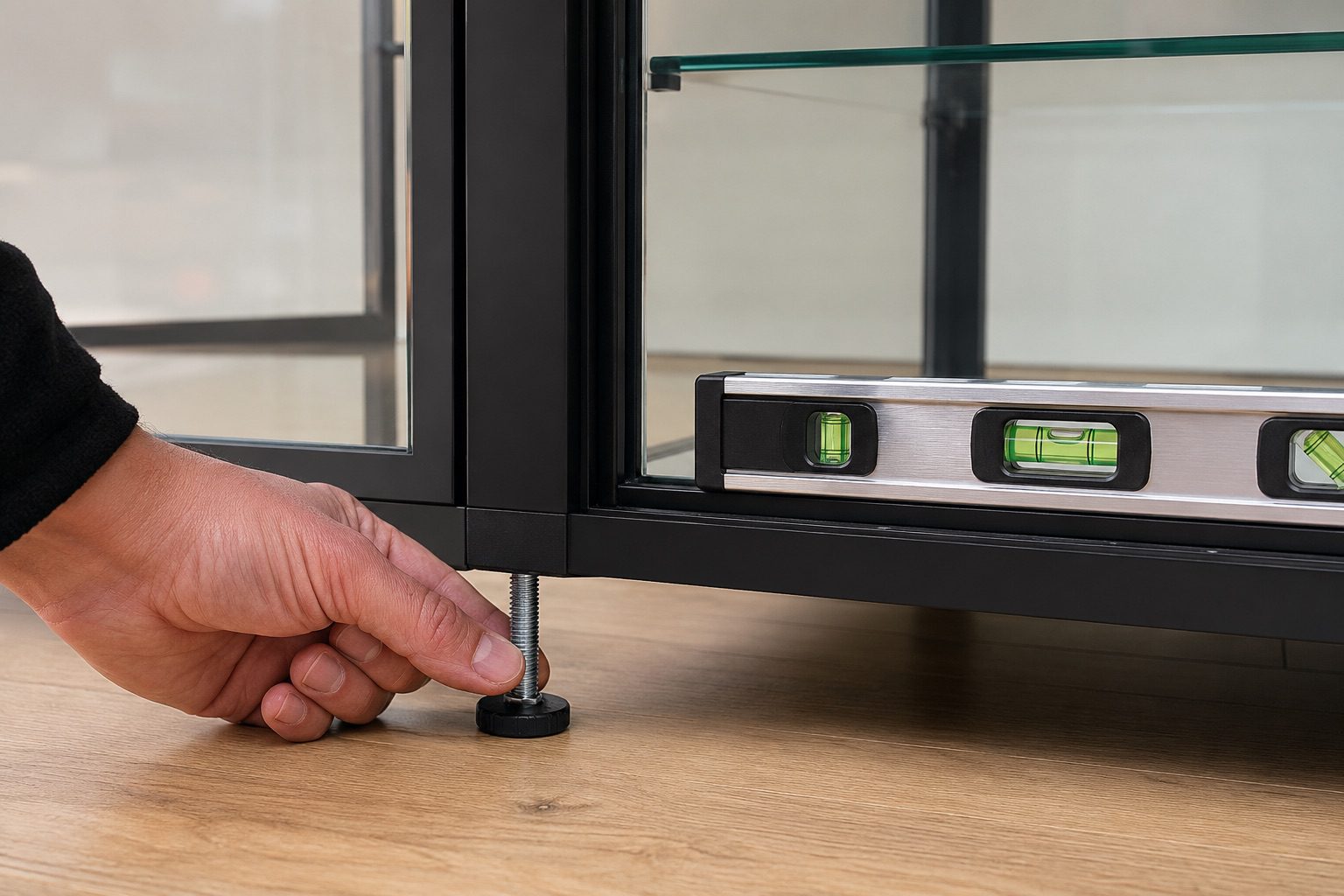
A 2-metre glass cabinet that rocks even slightly is both annoying and unsafe — a wobble at the base becomes a big sway at the top, and that's where the glass and your stock are. Almost every wobble comes down to one of two things: an uneven floor or an un-anchored top. Here's how to fix both properly.
First, find the cause
Push gently at the top of the cabinet and watch the base. If a corner lifts off the floor, it's a levelling problem. If all four feet stay down but the whole unit tips, it's an anchoring problem. Most tall cabinets need both addressed.
Levelling the base
Floors are rarely perfectly flat. Work through this in order:
- Put a spirit level on the top surface, front-to-back and side-to-side.
- Adjust the levelling feet — turn each foot until every corner sits firm with no rock.
- No adjustable feet? Use thin plastic shims under the low corner (not folded paper or cardboard, which compress).
- Re-check the level, then confirm the doors sit square and close evenly — a level cabinet has aligned doors.
On carpet, let the feet settle for a day and re-level, as the pile compresses under the weight.
Anchoring the top
Levelling stops the rock; anchoring stops the tip. Any cabinet at or above about 1.5m, or one holding heavy or high stock, should be secured to the wall — this is the single most important safety step, especially around children or in public retail spaces.
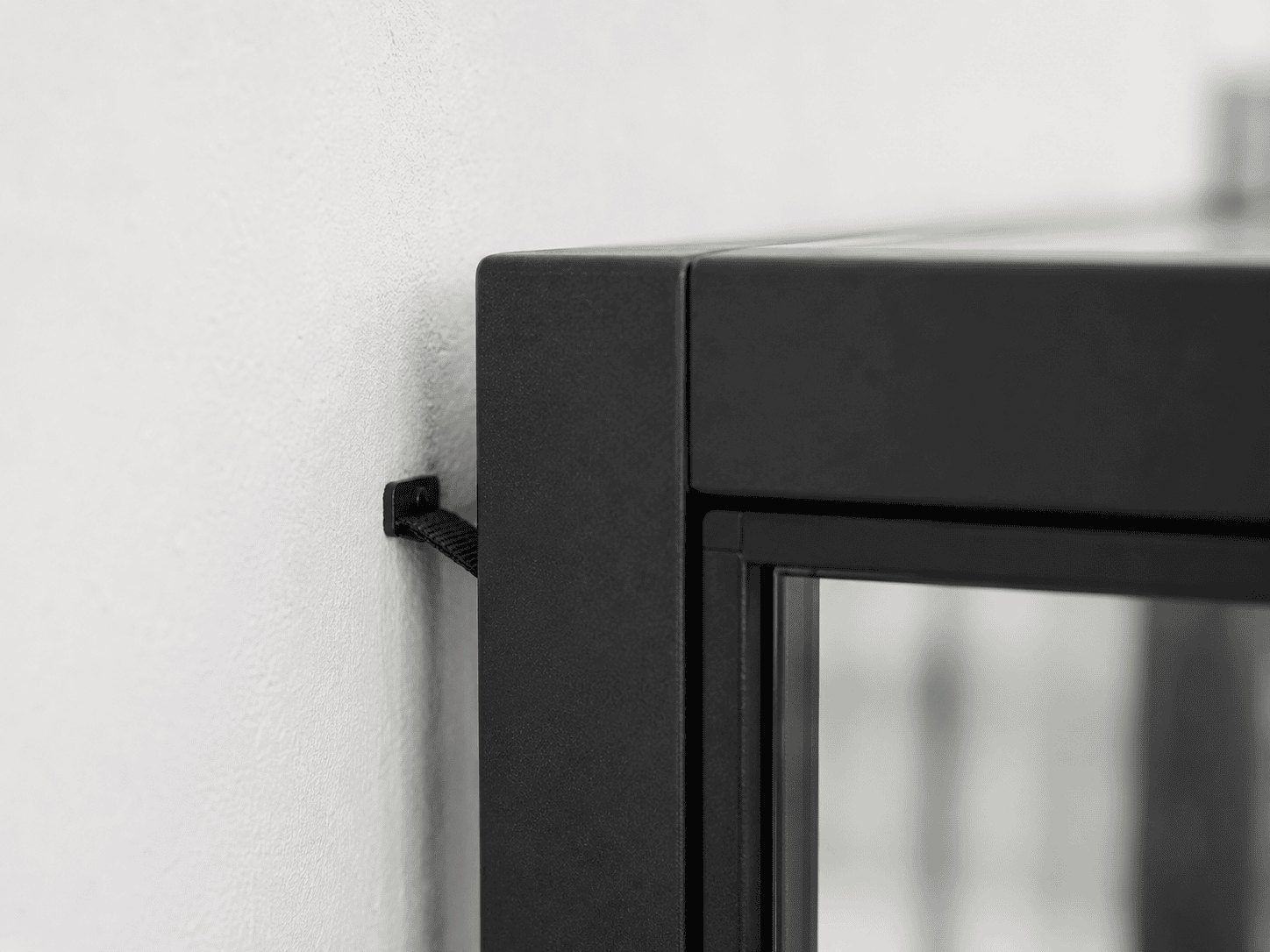
- Use an anti-tip strap or L-bracket from the top rail of the cabinet to the wall.
- Fix into a stud or masonry — plasterboard alone won't hold a falling load. Use the right anchor for the wall type.
- Keep the strap just taut, not straining — it's there to catch a tip, not to pull the cabinet.
Load it the right way
How you fill the cabinet changes its stability. Put heavier items low and lighter items up high to keep the centre of gravity down. Distribute weight evenly across each shelf rather than loading one side, and don't exceed the shelf's rated load. A top-heavy cabinet wobbles far more easily than a balanced one.
- Push-test to tell levelling (corner lifts) from anchoring (whole unit tips).
- Level with the feet or plastic shims until no corner rocks.
- Anchor anything over ~1.5m to a stud or masonry with a strap/bracket.
- Load heavy low, light high, evenly across shelves.
- Re-level on carpet after a day.
Every Hobbs cabinet comes with levelling feet and wall-fixing points as standard. Browse the range or talk to us about your space.