
Framed vs Frameless Glass Display Cabinets: Which Is Right for You?
Framed and frameless cabinets look similar — but they're built for completely different jobs.
Choosing the wrong one costs more than money — it costs presentation and flexibility. One system is structurally led and built for flexibility; the other is visually led and built for fixed presentation. Buy the wrong one and you'll either fight your cabinet every time you merchandise it, or pay for visual purity you never use.
What is a framed cabinet?
A framed cabinet uses a visible structural frame — usually aluminium — around every glass panel. The frame holds the glass, defines the geometry, and carries the weight of the contents.
- Visible aluminium frame — silver, black or white
- Tempered glass panels seated within the frame
- Adjustable glass shelves — move them to suit different product heights
- Higher weight tolerance per shelf; slimmer glass possible
- More forgiving on uneven floors and walls; parts easy to source long-term
Where framed wins: high-traffic retail (kiosks, market stalls, mall fit-outs), heavy or dense displays (jewellery, watches, tech), anyone rotating stock or seasonal displays, and commercial environments where cabinets get bumped, moved or reconfigured.
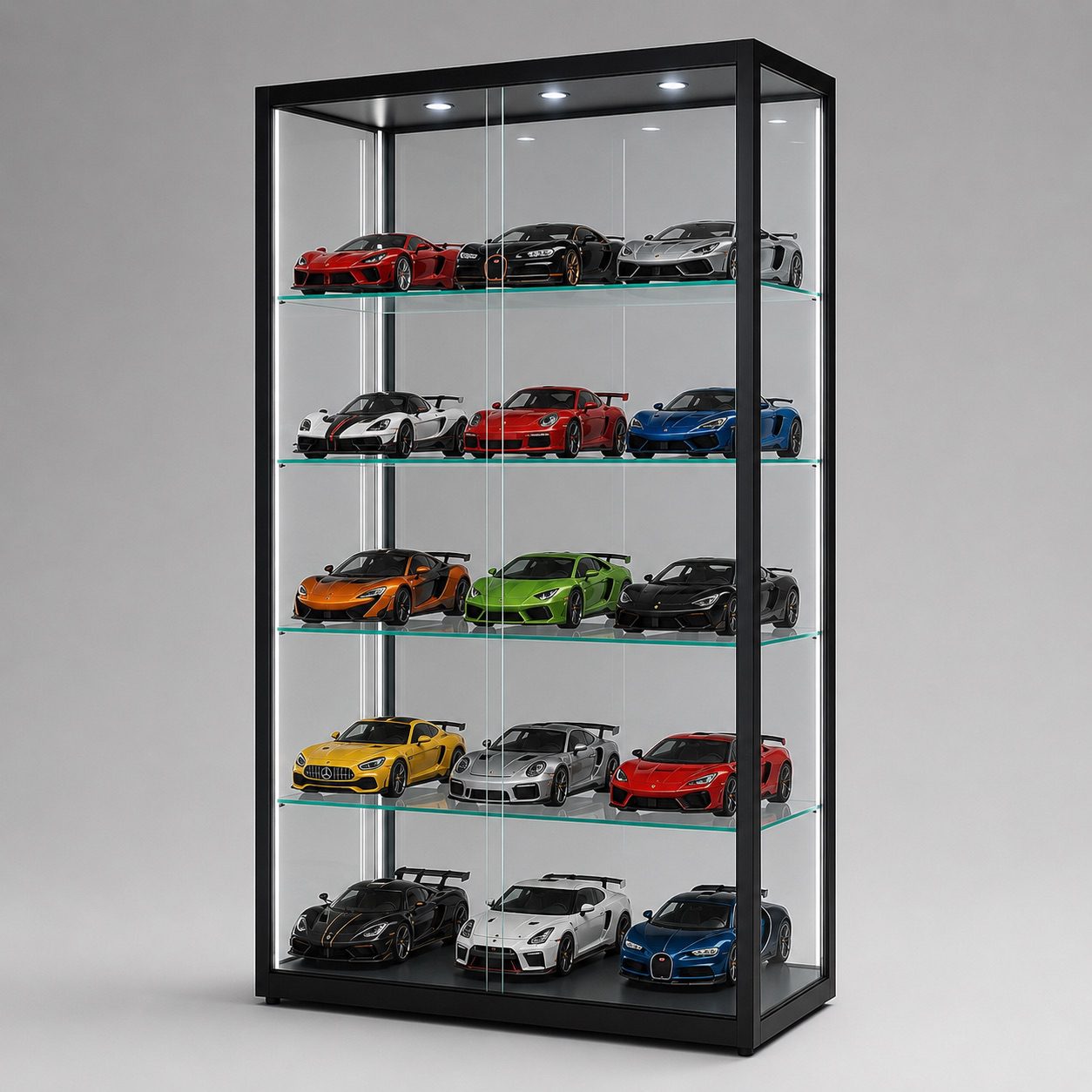
Framed cabinet with adjustable shelves — a dense model-car collection.
What is a frameless cabinet?
A frameless cabinet uses thick tempered glass panels joined by minimal hardware — usually small stainless steel clamps at the corners. There's no visible frame; the glass appears to float.
- Visually invisible structure — glass appears to float
- Thicker tempered glass required (the glass itself carries load)
- Fixed glass shelves — locked in position, cannot be adjusted after assembly
- Premium, architectural aesthetic with ultra-clean sightlines
- Higher unit cost; less tolerance for uneven floors or walls
Where frameless wins: premium residential displays (collector rooms, home showcases) with known, consistent product heights, luxury retail where the product should command 100% of attention, and boutique tenancies where design language matters more than throughput.
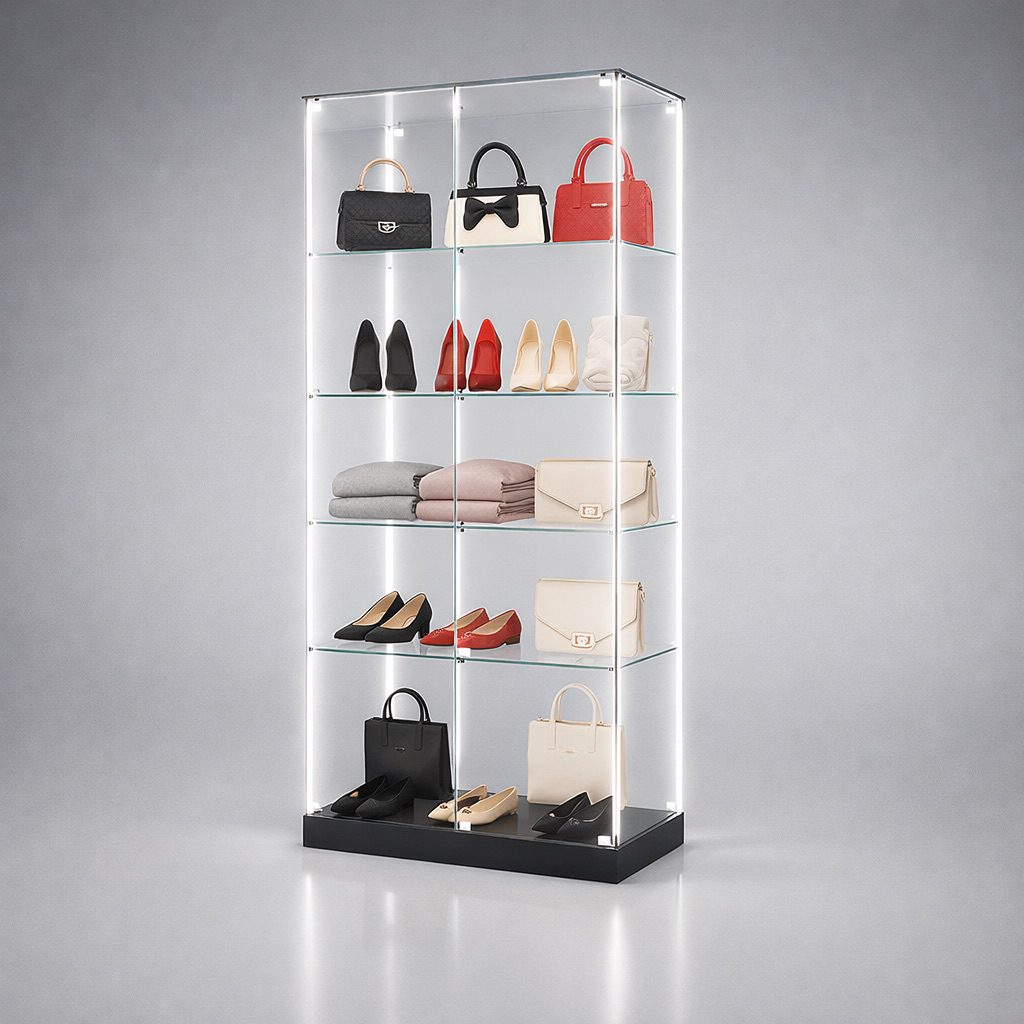
ClearEdge™ frameless — floating glass, fixed shelves.
Side-by-side
| Factor | Framed | Frameless |
|---|---|---|
| Visual presence | Defined edges, structural | Invisible, floating look |
| Glass thickness | Standard | Thicker (5–10 mm) |
| Shelf adjustability | Adjustable | Fixed |
| Weight per shelf | Higher | Lower |
| Cost | Lower | Higher |
| Uneven surfaces | More forgiving | Less forgiving |
| Positioning | Functional, commercial | Architectural, premium |
| Best fit | High-traffic, changing displays | Premium static display |
The real question
It isn't "framed or frameless?" — it's what is your cabinet actually doing?
If it's working hard — bumped, moved, restocked twice a day, holding dense product, or displaying items of varying heights — buy framed. The structural visibility isn't a downside; it's protection, and the adjustable shelves let the cabinet evolve with your stock.
If it's doing visual work — anchoring a luxury concept, displaying a known unchanging collection, defining a brand's aesthetic — buy frameless. The premium isn't decorative; you're paying for the absence of visual noise. Just understand the trade-off: once those shelves are set, they're set.
Our recommendation
For retail commercial environments, we recommend framed — the LuxGuard™ and LuxLine™ ranges are built for shopping-centre tenancies, market stalls and active retail, with adjustable shelving.
For premium residential or luxury retail with stable display content, we recommend frameless — the VISAT™ Frameless range is built for spaces where visual purity defines the brand and shelf positions don't need to change. We supply, deliver and install both across Perth and WA.
Not sure which suits your space?
Tell us your space, load and aesthetic direction and we'll recommend the right build — supplied, delivered and installed across Perth and WA.