
Countertop vs Freestanding Display Cases: What to Use Where
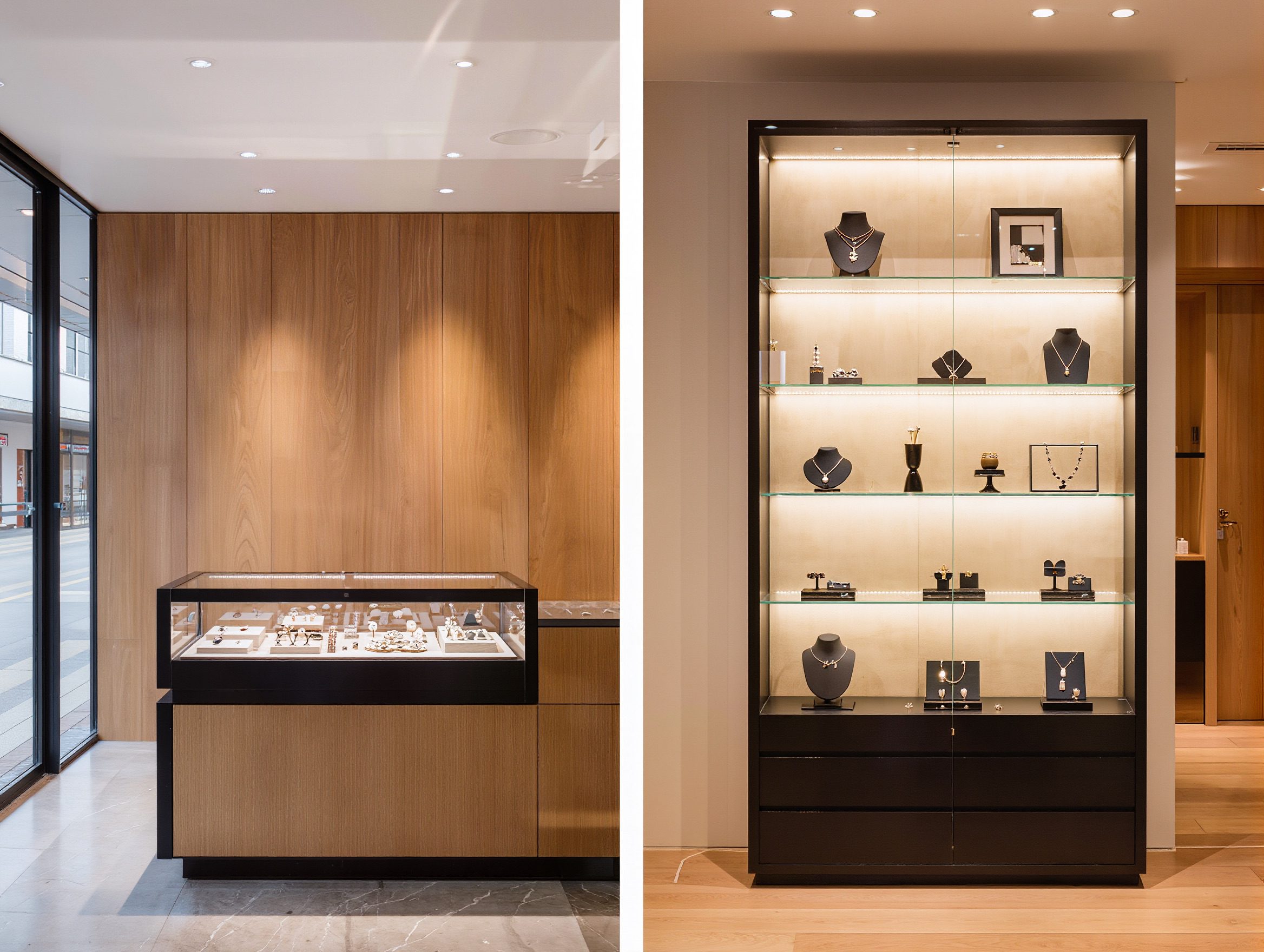
Two products, two very different jobs. A countertop display case sits on an existing counter or bench and puts small, high-value items right at eye level at the point of sale. A freestanding display case stands on the floor as a piece of furniture in its own right, showing a full collection or range from top to bottom. Choosing the wrong one wastes floor space or hides your best stock — so it pays to match the case to the job.
Countertop display cases
A countertop case is compact, portable and made to sit on a counter, bench or existing cabinet. It’s the classic choice for jewellery, watches, fragrance, phones, vapes and other small, high-margin items you want close to the customer and the till. Because it’s at arm’s reach, staff can bring pieces out easily, and the customer sees them at eye level without bending down.
Best for: point-of-sale display, small valuables, impulse buys, and any store short on floor space.
Freestanding display cases
A freestanding case stands on the floor and works as furniture. With multiple glass shelves running full height, it holds a whole collection or product range and can be seen from across the room. This is the case for collectibles, trophies, bags, giftware, electronics and retail merchandise where you want presence and volume, not just a single hero piece.
Best for: full collections, larger items, feature displays, and filling wall or corner space that would otherwise sit empty.
| Countertop | Freestanding | |
|---|---|---|
| Sits on | A counter or bench | The floor |
| Best for | Small valuables at POS | Full collections & ranges |
| Capacity | A few key pieces | Many items, multiple shelves |
| Floor space | None — uses counter | Needs a footprint |
| Viewing height | Eye level, close up | Top to bottom, from a distance |
Why not both?
Most well-laid-out stores use the two together: freestanding cases along the walls and corners to show the range and draw people in, and countertop cases at the till for the small, high-value items you sell face to face. A counter with a glass showcase top — part display, part storage — can also bridge the two, giving you a working service point that still shows stock.
- Small, high-value items at the till → countertop
- A full collection or product range → freestanding
- Tight on floor space → countertop
- Empty wall or corner to fill → freestanding
- Want display + storage + a service point → display counter
We make countertop cases, freestanding cabinets and glass display counters — and can help you plan the right mix for your space. Get in touch or design your own.
Get in touch Back to guides