
Planning Garage Storage with Steel Shelving
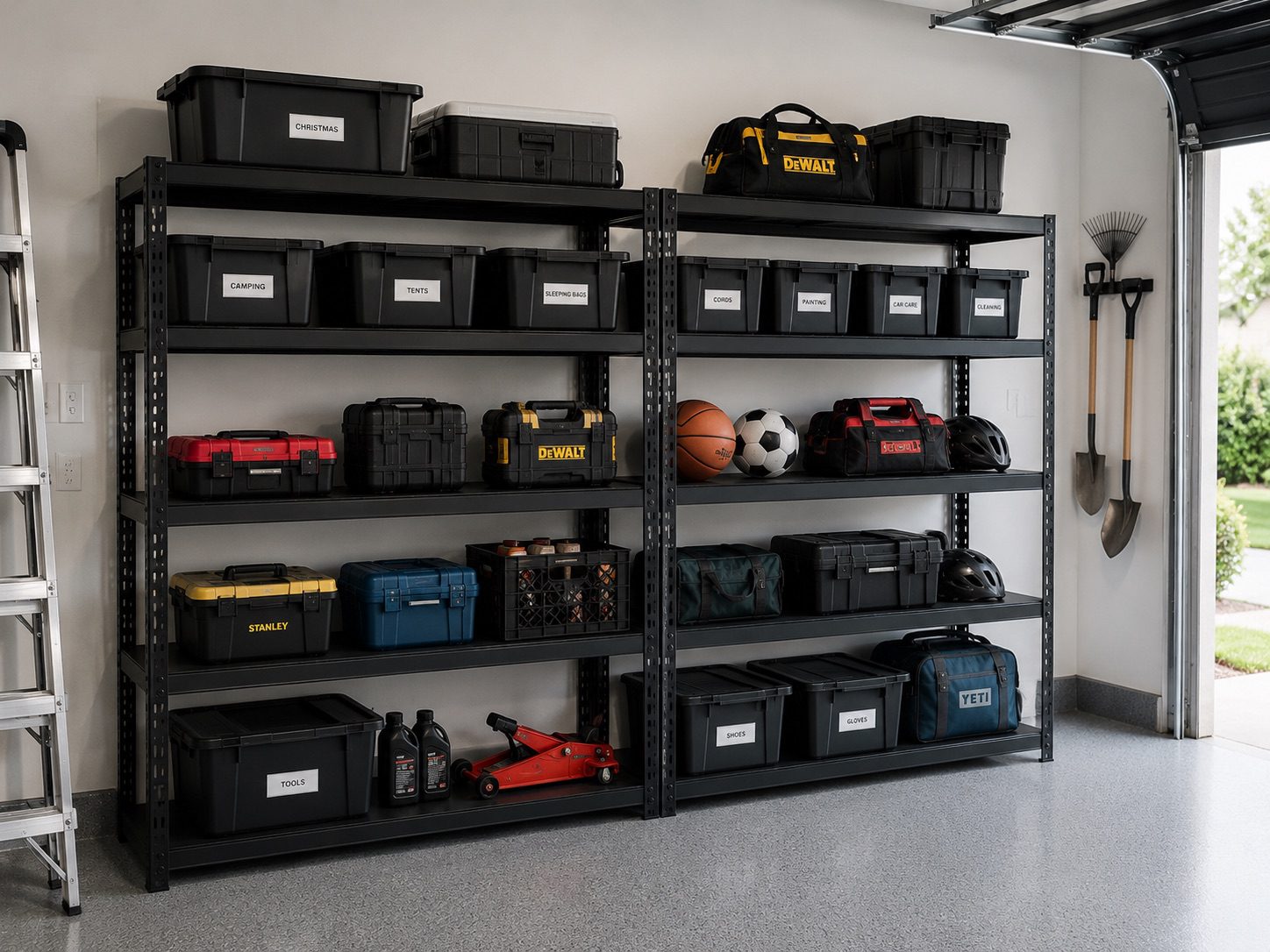
A garage fills up fast: tubs, tools, camping gear, paint, sports equipment. Good steel shelving gets it off the floor — but only if it fits around the car and the doors. This guide walks through planning it before you order.
1. Measure the space first
- Wall length: measure each wall you want to use, and note power points, taps, windows and the roller-door track.
- Height: measure to the lowest point — often the roller door, its motor or a beam, not the ceiling.
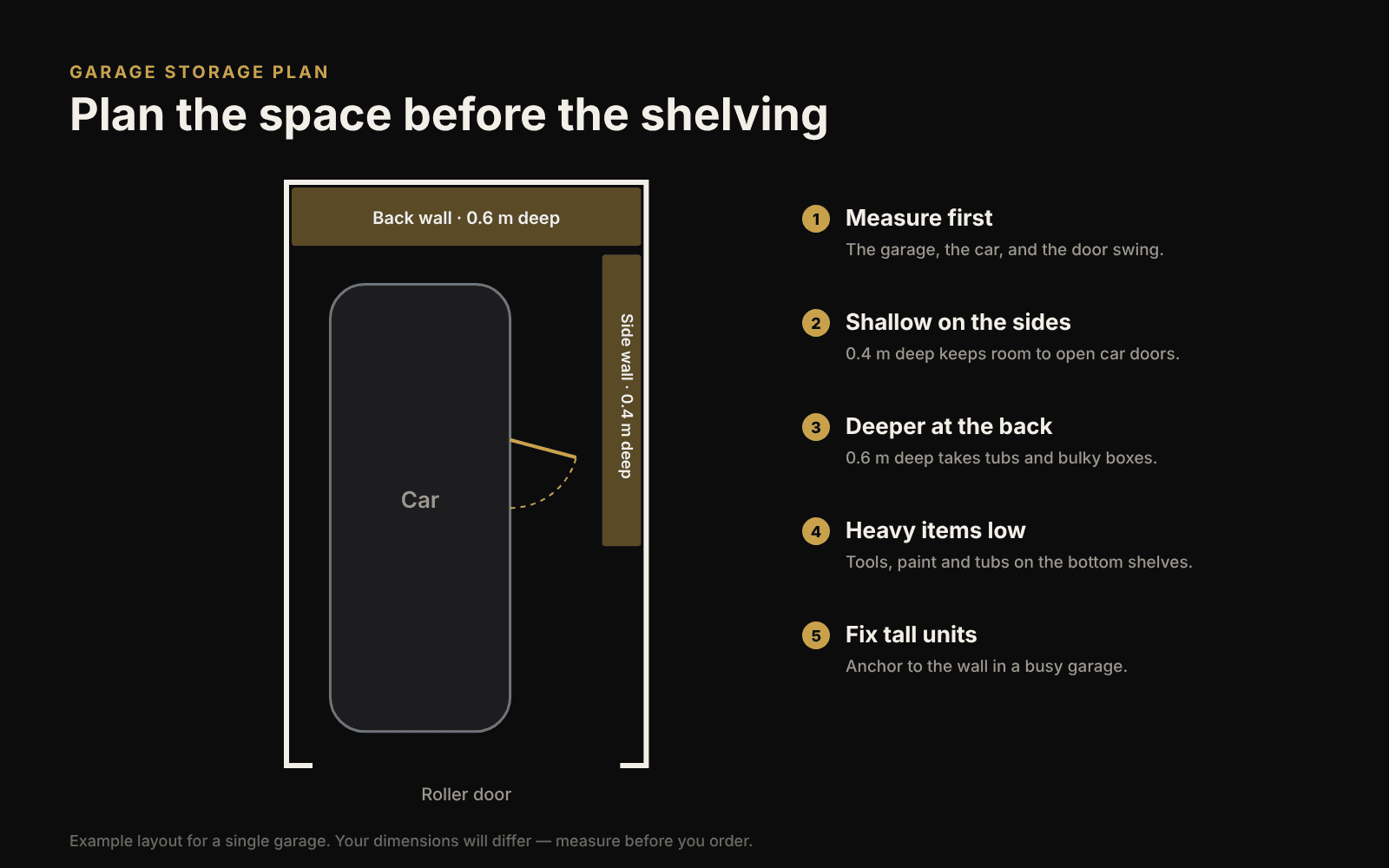
- Car clearance: park the car, open the doors fully and measure from the open door to the wall. That gap is the most depth you can use on that side.
2. Choose depth by wall
Depth is the decision that matters most in a garage.
- Side walls next to the car: 0.4m deep. Shallow shelving leaves room to open doors and walk past. It still takes paint tins, tools, shoes and small boxes.
- Back wall: 0.6m deep. Most storage tubs and moving boxes fit a 0.6m shelf well. If the car stops short of the back wall, this is where the bulk of your storage goes.
- Deeper (0.7–0.8m): only where there is real floor space to spare, such as a second bay or a shed.
3. Choose height
Our 200kg shelving comes in 1.6m, 1.8m, 2m, 2.5m and 3m heights. A 1.8m or 2m unit suits most garages and keeps the top shelf reachable. Go taller only if the ceiling allows and you are happy using a step ladder for the top level — it is ideal for seasonal items you rarely need. Under a window or bench, a 1.6m unit keeps things lower.
4. Choose the load rating
- 200kg per shelf suits most garage storage: tubs, tools, camping gear and boxes.
- 500kg per shelf for heavy items such as engine parts, tiles or bags of product.
- Ratings are per shelf, evenly spread. See load ratings explained for how to read product names.
5. Plan where things go
- Heavy items low: keep the heaviest tubs and tools on the bottom two shelves.
- Everyday items at waist to eye height: the things you reach for weekly.
- Light, seasonal items on top: Christmas decorations, camping gear, spare bedding.
- Label tubs on the end that faces out, so you can find things without pulling them down.
6. Keep it safe
- Fit the safety pins to every beam — they stop beams lifting out if knocked.
- Fix tall units to the wall — the uprights have holes along them, so just drill into the wall and screw the unit on. This matters most for 2.5m and 3m units.
- Prefer to bolt it to the floor? We can weld on floor plates at extra cost — just ask.
- Leave a clear walkway — at least the width of an open car door on the side you get out.
- Keep fuels and chemicals on low shelves, away from kids, and follow the label.
7. Need a workbench too?
A steel workbench at one end of the shelving run makes a practical work zone. See choosing a steel workbench.
When your shelving arrives (flat-packed in three packs), follow the assembly instructions — all you need is an Allen key.
- Measure walls, lowest overhead point and car-door clearance.
- 0.4m deep on side walls; 0.6m deep on the back wall.
- 1.8m or 2m high suits most garages.
- 200kg per shelf for most storage; 500kg for heavy items.
- Heavy low, light high, fit safety pins, fix tall units.
Enter your wall length, depth and height to see every shelving size that fits, with prices.