
Modular vs fixed shopfits: which one actually suits your store?
Retail & layout
4 min read · Updated July 2026
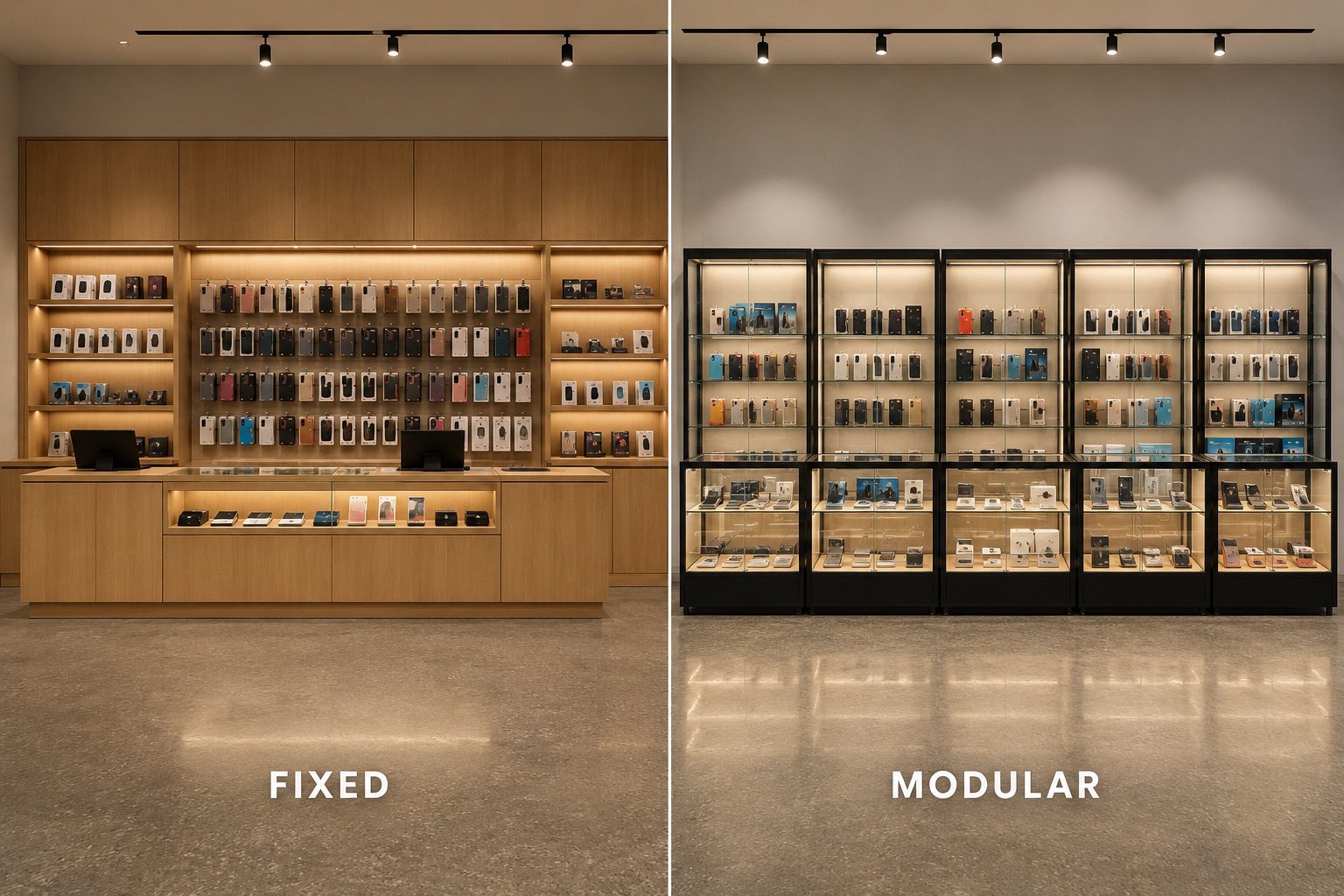
When you’re fitting out a store, one decision shapes everything after it: modular or fixed? Both can look excellent — the right choice depends on how your business actually operates, how often your layout changes, and what you’ll want to do with the space in three years’ time. Here’s how to decide.
What “modular” and “fixed” really mean
A fixed shopfit is built into the space — joinery made and installed for that exact spot, often bonded to walls and floors. A modular shopfit is built from freestanding, repeatable units — cabinets, counters and towers that stand on their own and can be rearranged, added to, or relocated. The difference isn’t quality; it’s flexibility.
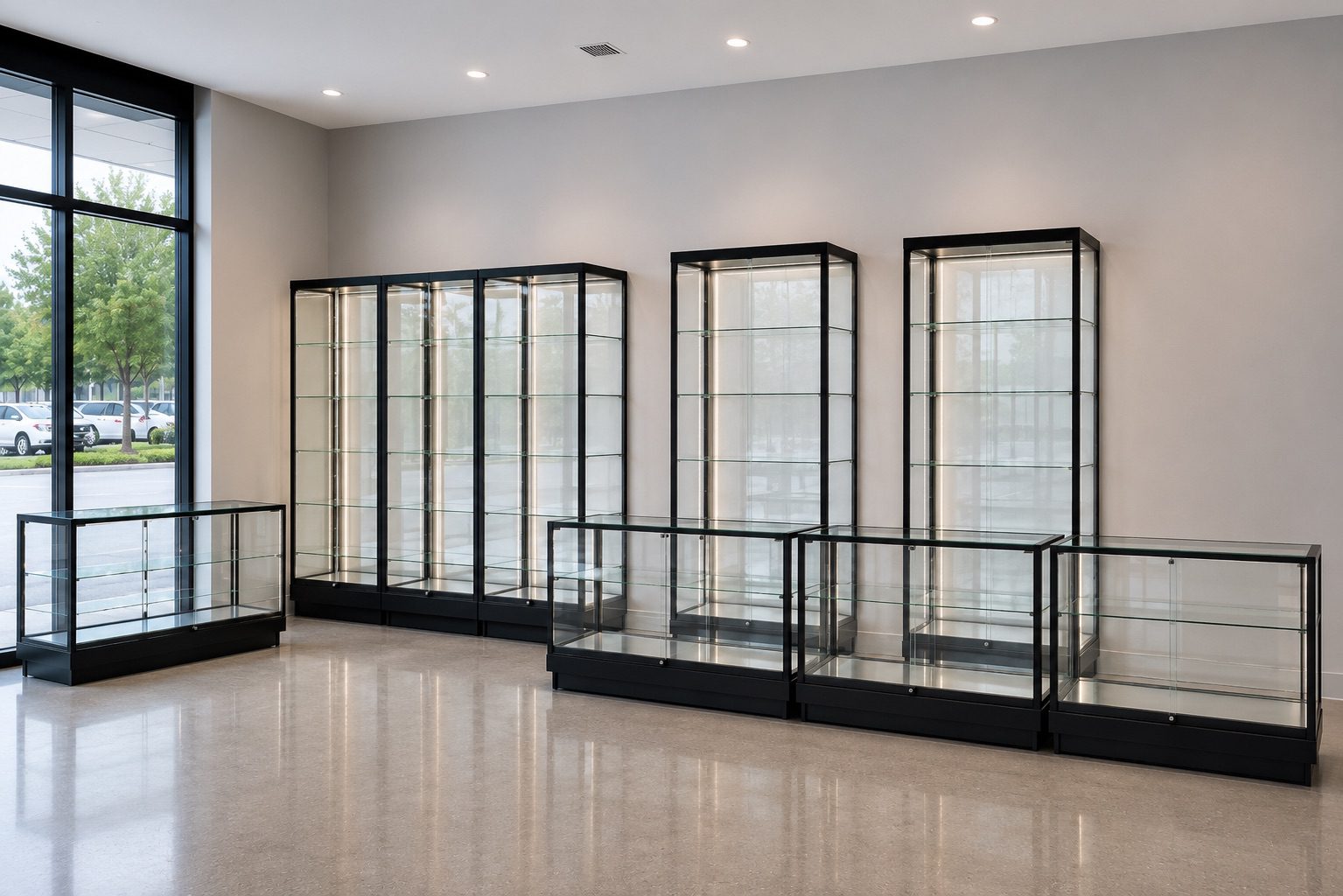
A modular run — freestanding units that fill the space and can be reconfigured later.
When fixed makes sense
Fixed shopfits suit long leases, owned premises and highly bespoke layouts where the joinery is part of the brand statement. If your space is unusual — awkward angles, built-in nooks, a hero feature wall — fixed joinery can exploit every centimetre. The trade-off is cost, lead time, and that it stays with the building when you leave.
When modular wins
Modular suits most retailers, and especially anyone who values flexibility: pop-ups, growing businesses, shorter leases, and stores that refresh their layout with the seasons. Units can be reconfigured for a new range, added to as you grow, and taken with you when you move. You get a coordinated, high-end look without locking your capital into the building.
Towers and counters as modular units — a coordinated run that stays flexible.
Choose fixed for owned premises, long leases and bespoke feature joinery. Choose modular for flexibility, shorter leases, growth, seasonal refreshes and the ability to take it with you.
You don’t have to choose only one
Many of the best stores mix the two — a fixed feature or service counter as the anchor, surrounded by modular cabinets and towers that flex around it. That gives you a signature fixed moment where it counts and modular flexibility everywhere else.
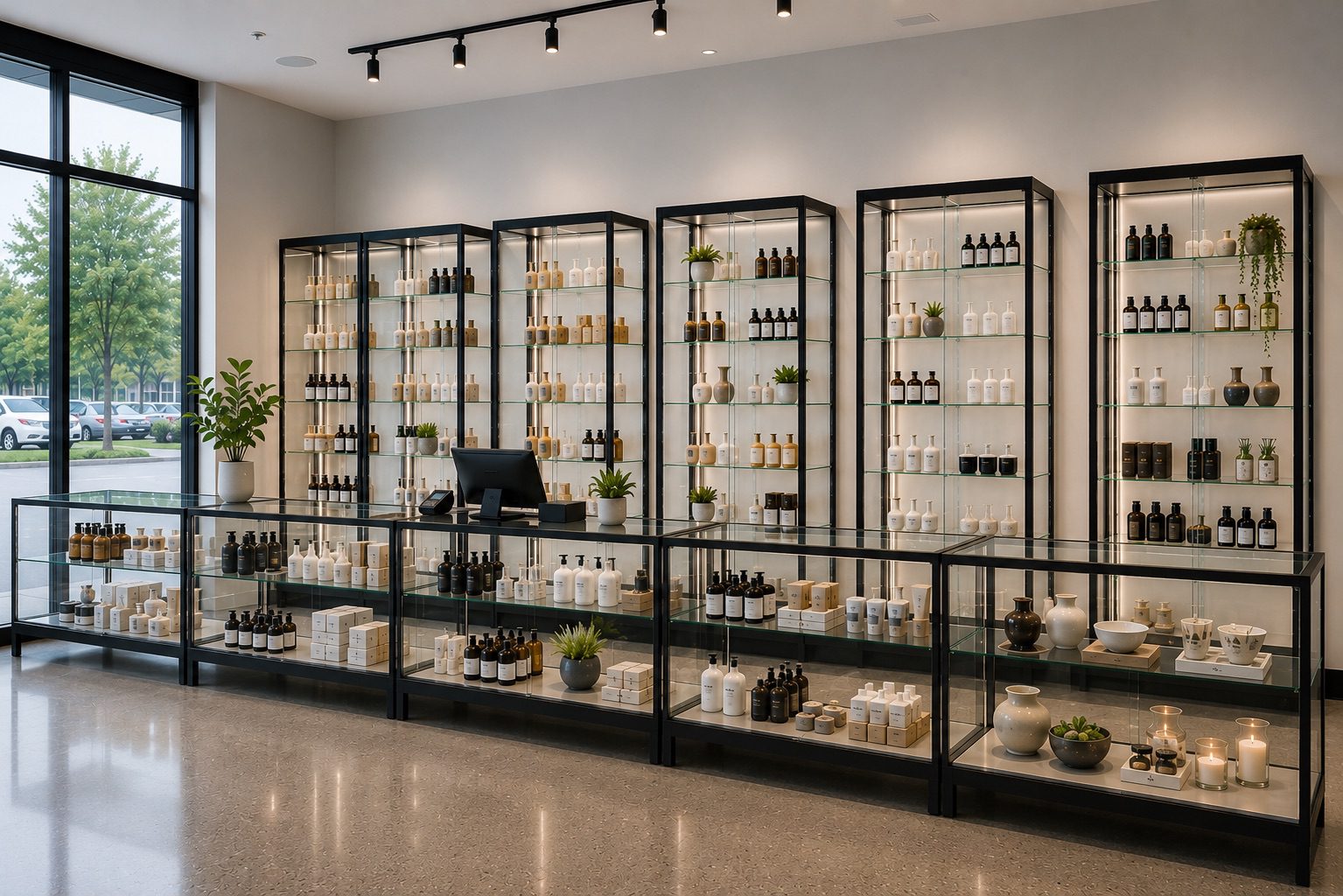
The finished shopfront — a coordinated fit-out that reads as one considered space.
Talk to us about a modular run of glass cabinets and counters built to your exact sizes — the flexible way to fit out a retail space.
Get in touch Back to guides