
Five Cabinets, Freighted to Sydney and Built at Home
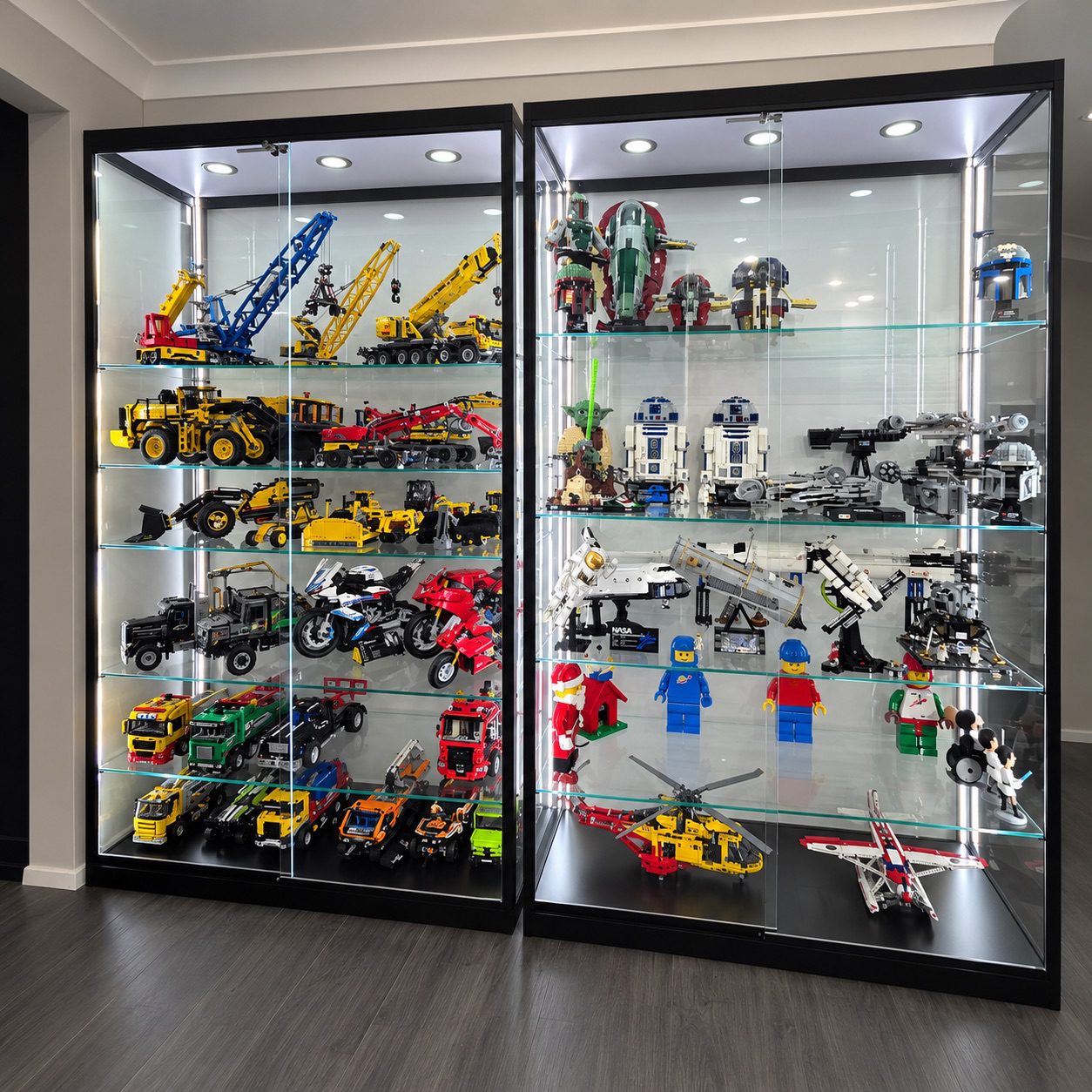
Technic on the left, Star Wars on the right — built by the owner.
Most of what we show here we deliver and assemble ourselves, across Perth. This one we never saw. A collector in Oakhurst, in Sydney’s west, ordered five cabinets, we crated them in Malaga and put them on a truck, and some weeks later he sent through photographs of the finished thing. Ten crates, 3,900 kilometres, five cabinets built by one bloke with an allen key.
Why flat-pack is the point, not a compromise
Nobody freights an assembled 2m glass cabinet across the country — the cost is absurd and the risk is worse. Every unit we build ships flat-packed horizontally in two fully enclosed plywood crates, glass separated and braced, freight insurance included. That is what makes a Perth cabinet a realistic purchase in New South Wales at all, and it is why the same product goes up a Sydney staircase as easily as it goes through a Perth front door.
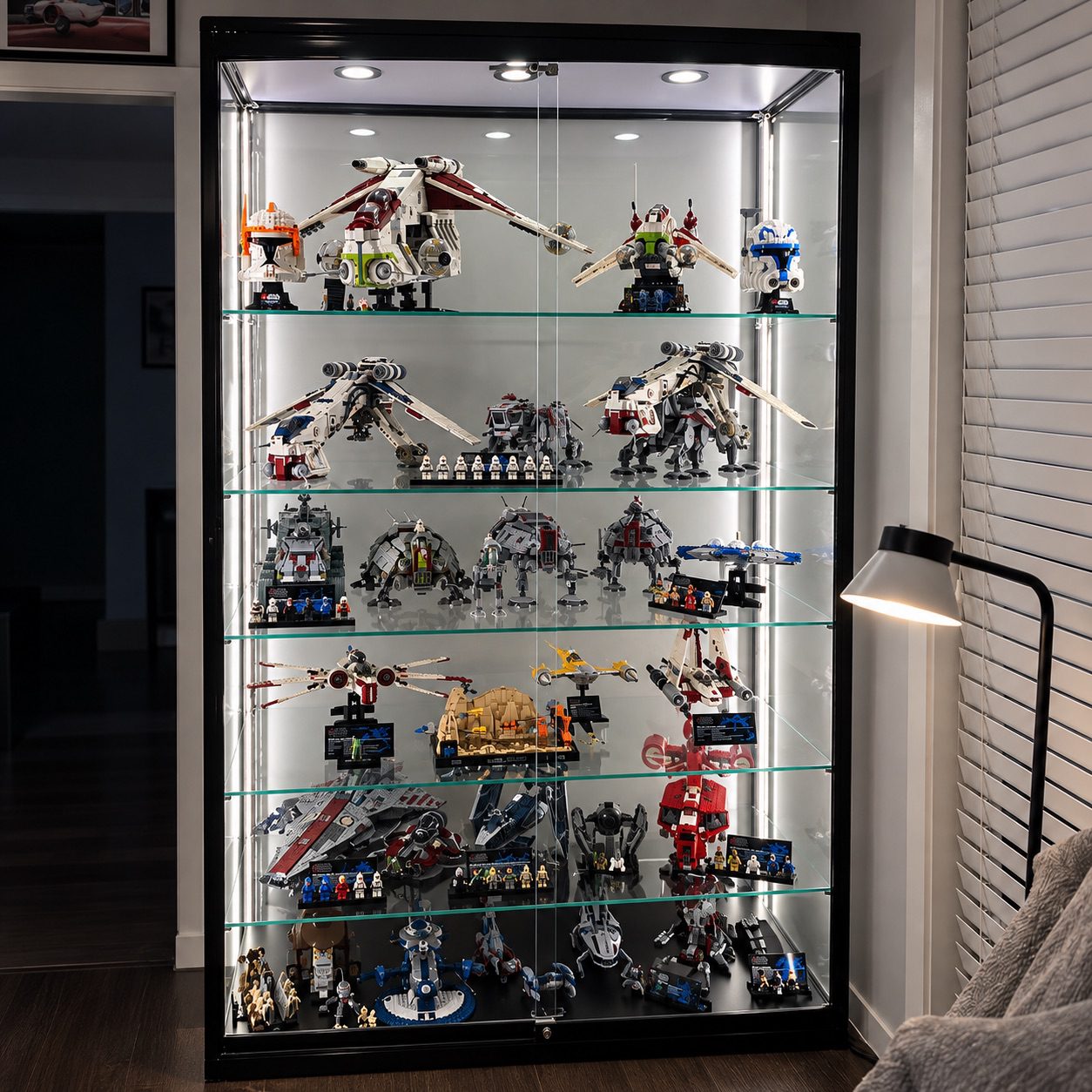
600mm deep — enough to show a gunship wings-out, not side-on.
Two depths, chosen deliberately
This is the part worth paying attention to, because it is the decision most people get wrong. The pair standing side by side are standard LuxGuard™ at 500mm deep — right for Technic trucks, cranes and the smaller Star Wars sets, which are long rather than wide and sit comfortably in that depth. The three standalone units are LuxGuard™ Pro at 600mm. That extra 100mm sounds trivial and is not: it is the difference between a Republic gunship or an AT-AT sitting square to the glass with its wings and legs spread, and the same model turned sideways to fit. On a collection this size, mixing the two depths gets both right rather than compromising everywhere.
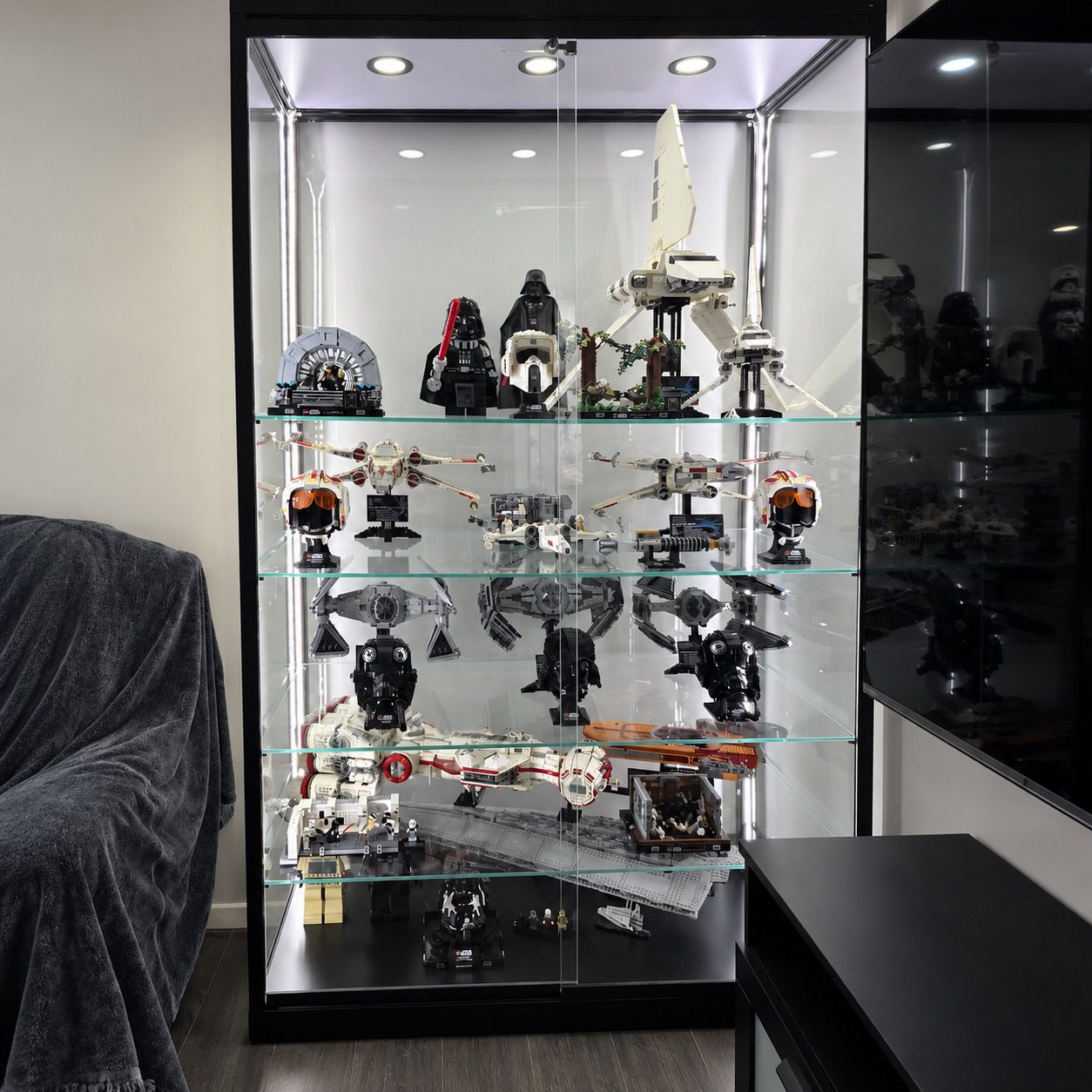
Helmets at the front, ships behind — the depth does both.
Twenty-five shelves, every one set by hand
Five adjustable tempered glass shelves per cabinet — twenty-five across the job, thirty display levels counting the bases. Look at how differently they are set: close together for minifigures and helmet busts, opened right up for walkers and gunships, and in one cabinet the base left completely clear so a UCS Star Destroyer can lie lengthways. The Pro shelves carry 30kg each and the standard 25kg, which on large UCS builds is not a theoretical number.
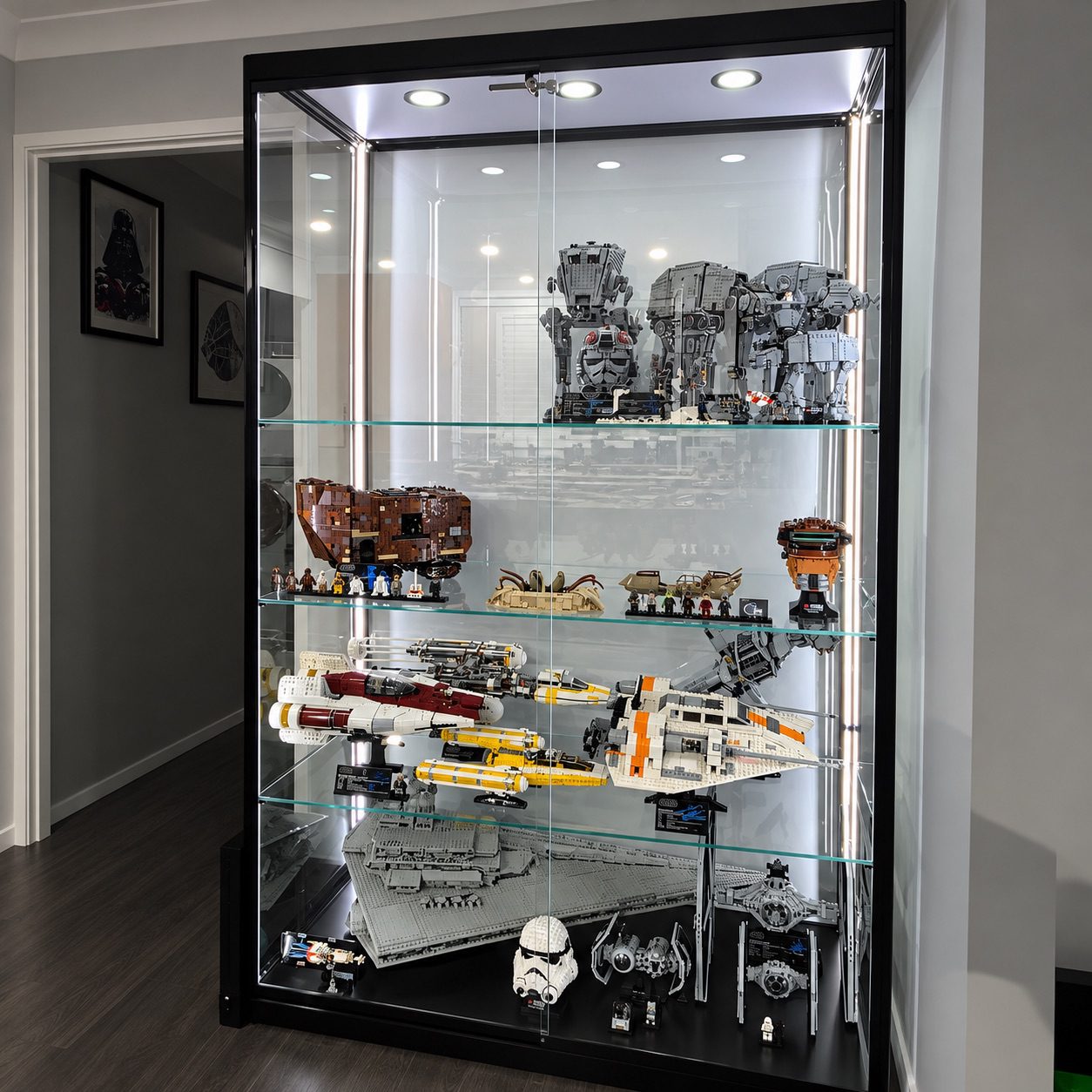
Shelves set wide for the walkers, base kept clear for the big one.
Lighting is what separates a cabinet from a shelf
Each of the five carries three LED downlights in the top panel and four COB strips running the full height of the internal corners. The downlights give the upper shelves presence; the corner strips carry even light to the base, which is where open shelving always fails. COB rather than standard LED means a continuous 5mm line instead of a row of diodes — no dots, no hot spots reflected across five cabinets’ worth of glass. All of it runs from a phone over Bluetooth: full brightness for photographs, wound down to a glow in the evening.
Sealed, locked, and dust-free for good
Dust is what kills a LEGO collection on open shelving — it settles into every stud and seam, and cleaning a detailed UCS build is an afternoon nobody wants. Enclosed glass on all four faces ends that permanently. All five cabinets lock on a keyless combination, so there are no keys to distribute or lose across a display of this size.
Built by the customer, and it shows
We install across Perth, but plenty of customers interstate assemble their own — and five cabinets is a serious weekend. The frames go together square, the glass drops into channel, the lighting plugs in, and the result is what you see here: levelled, aligned and photographing like a showroom. We offer installation locally for anyone who would rather not, but the product is built to be assembled once, properly, by whoever is holding the instructions.
Every cabinet ships flat-packed in enclosed plywood crates with freight insurance, anywhere in Australia. Black, silver or white; 500mm or 600mm deep. Tell us what you’re displaying and we’ll tell you which depth you need.
Get in touch Back to projects