
What a mirror glass display cabinet looks like once installed
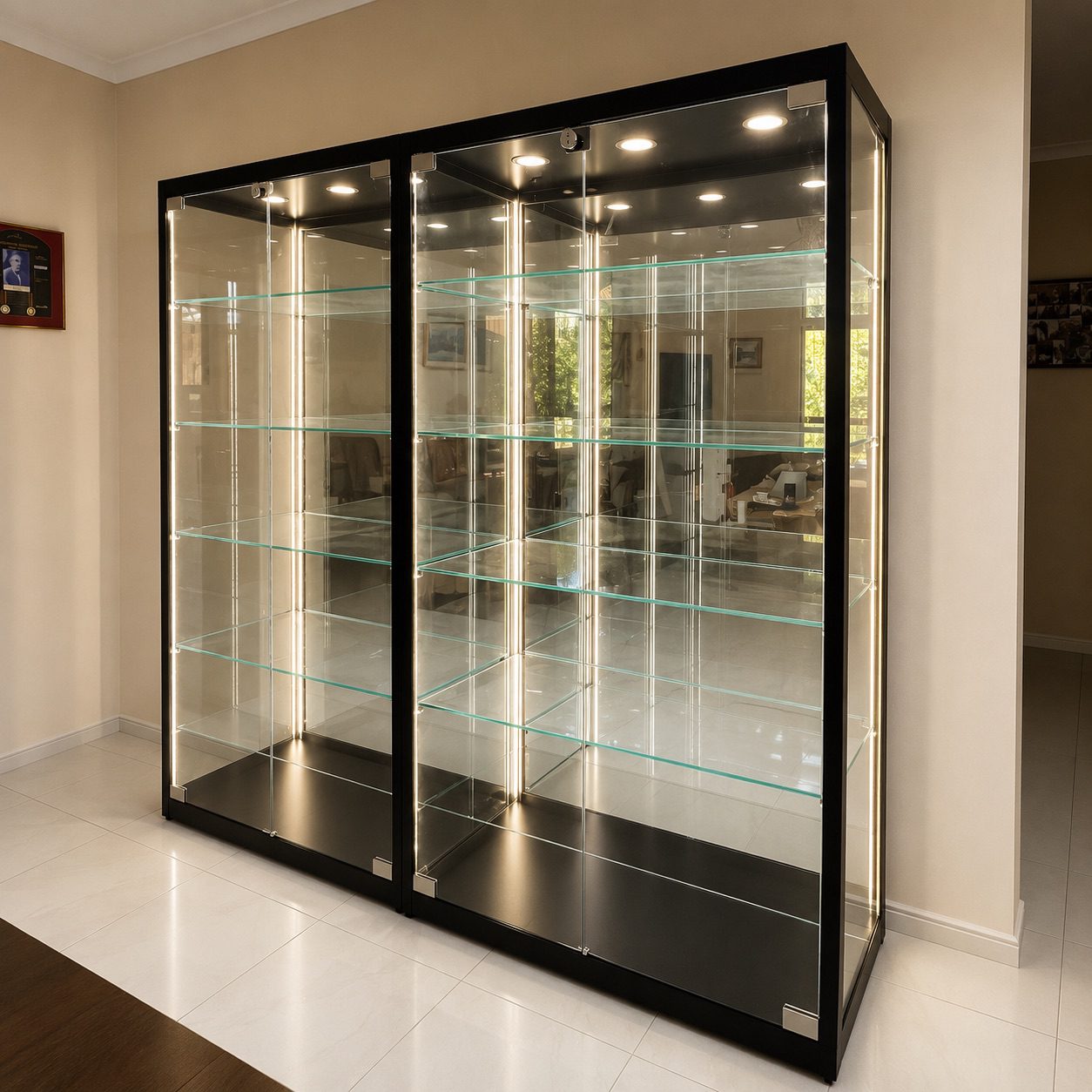
Studio photos are useful — but they do not tell the full story. This is what our LuxGuard™ mirror glass display cabinet (1.2m × 0.5m × 2m) actually looks like once delivered, assembled and installed in a real space, rather than lit and staged in a studio.
This unit was delivered and assembled on a Monday in Beeliar, and the photo above was taken immediately after installation — before styling, before the first clean. That is deliberate: it shows you the honest starting point.
Mirror back and LED lighting in real life
In a real installation, the mirror back and LED lighting behave differently from studio shots — and that is by design. The mirror back panel increases visual depth, making the cabinet appear fuller and more dimensional once it is placed against a wall. It also reflects the vertical LED strips and top downlights, spreading light evenly across each shelf instead of concentrating it in one spot.
In practice, that gives you:
- brighter internal display without harsh glare
- improved visibility from multiple angles
- a balanced, showroom-style presentation in real rooms
Minor reflections, fingerprints or dust visible immediately after installation are normal, especially with mirror-backed cabinets. They disappear once the cabinet is cleaned and styled. What stays constant is the lighting performance, shelf alignment and structural finish.
Shelf alignment and glass clarity
Once assembled, the glass shelves sit level, evenly spaced and properly supported. That matters not just for appearance but for long-term stability — shelf alignment affects how light travels through the cabinet and how items read at different heights. Any temporary marks in post-install photos are part of real-world handling, not build quality. Glass thickness, edge finish and structural rigidity are fixed characteristics of the cabinet.
Locking doors and sealing
This cabinet uses lockable glass doors designed to sit square and aligned once closed. Installed correctly, door gaps are minimal and consistent, the cabinet forms a properly enclosed display space, and dust and environmental exposure are reduced. That matters most for home collectors, or pet and bird environments, where sealing counts for more than appearance alone — and it is exactly what a studio photo cannot demonstrate but an installed one can.
Flat-pack does not mean light-duty
This cabinet was supplied flat-packed and assembled on site. Flat-pack allows safer transport and controlled installation; once assembled, the cabinet behaves as a solid, fixed display unit suitable for long-term use in homes or showrooms. Flat-pack affects delivery, not performance.
Final thoughts
Real installation photos are not about perfection — they are about accuracy. They show scale in real rooms, lighting in real conditions, how mirror backs actually behave, and what "assembled" truly means. If you want to understand what you will receive, not just what a studio image suggests, a real installation is the most honest reference there is.
We supply, deliver and install across Perth and Australia-wide. Tell us the room and we will size and build it to suit. Call 08 6237 1039.
View glass display cabinets Back to guides